53 Ilam Tea Factories Reopen After Three-Point Agreement Resolves Export Deadlock
Following a prolonged shutdown triggered by India's stringent new quality testing rules, 53 orthodox tea factories in Suryodaya Municipality, Ilam, have resumed operations after local authorities agreed to manage safety storage for stockpiled tea.
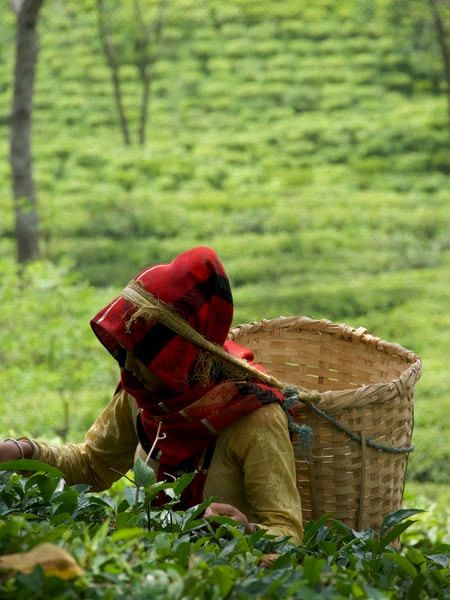
Fifty-three orthodox tea processing factories across Suryodaya Municipality have officially reopened after a breakthrough three-point agreement brought an end to an operational deadlock. The factories had collectively shuttered doors after Nepal's cross-border tea exports to India ground to a complete halt due to rigorous new customs barriers. The export friction began after the Tea Board of India implemented a mandatory Standard Operating Procedure (SOP). The directive requires comprehensive lab testing for every single tea consignment crossing the border, holding up shipments for up to 15 days and mandating the destruction of batches failing residue limits. With warehouse capacities completely exhausted, local factories stopped processing, forcing local farmers to transport 60 to 70 truckloads of green leaves daily to CTC factories in Jhapa at deflated rates to avoid total spoilage. To salvage the sector, an emergency meeting was coordinated by the municipality's Tea Problem Resolution Committee, led by Coordinator Pema Ugen Lama, alongside Acting Mayor Durga Kumar Baral and the Suryodaya Orthodox Tea Producers Association. Under the newly signed tripartite agreement, the local government has committed to immediately arranging and securing a specialized storage infrastructure to hold the 1 million kilograms of orthodox tea currently gridlocked at production plants. Furthermore, the municipality has declared readiness to scale this storage facility to hold up to 3 million kilograms—equivalent to a full season's yield—within a week under a newly formed management committee led by Devendra Sharma. In return, industrialists have agreed to absorb the ongoing harvests so that farmers' hard work does not go to waste. However, due to the severe cash-flow crunch caused by the border blockade, farmers have agreed to defer receiving their crop payments until export channels normalize. The final leg of the agreement institutes a sweeping ban on chemical pesticides across all 14 wards, backed by immediate localized awareness campaigns to ensure Nepali tea permanently complies with international sanitary and phytosanitary metrics. While specialty producers like the fully organic Gorkha Tea Estate managed to bypass the crisis by shipping directly to third-country premium markets, the broader industry is looking toward Kathmandu. The Office of the Prime Minister and Council of Ministers has established a high-level federal task force mandated to deliver an actionable export recovery roadmap within two weeks to clear the diplomatic bottleneck with Indian trade authorities.