Finance Minister Dr. Wagle Clarifies Revenue Reforms and Addressing Informal Economy
Following a 10-day deadlock triggered by Prime Minister Balendra Shah's controversial remarks, parliamentary discussions on the new budget have ignited intense verbal warfare between the ruling coalition and the opposition.
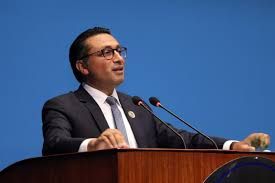
Theoretical deliberations on the budget for the fiscal year 2083/84 have commenced in parliament, pushing through a 10-day gridlock caused by Prime Minister Balendra Shah's contentious public remarks. Presented by the new post-GenZ movement government, the fiscal plan has drawn massive public interest, yet early parliamentary sessions remained deeply fractured along party lines. During Thursday's session, 40 lawmakers debated the bill, with opposition benches raising severe allegations against Finance Minister Dr. Swarnim Wagle. Opposition lawmaker Niskal Rai accused Dr. Wagle of treason over executive tax rate modifications in the economic bill, while Dr. Amaresh Kumar Singh of the ruling coalition broke ranks to brand the budget a "deflated balloon," claiming a budget crossing 32% of GDP is structurally unsustainable. Additional concerns were raised by Sandip Rana of the Nepali Congress, who criticized the 7% economic growth target as impractical, and Gyan Bahadur Shahi of the RPP, who opposed the 40% subsidy constraint that limits agricultural funding only to enterprises with a minimum initial capital of 20 million rupees. Conversely, ruling party lawmakers aggressively stepped up to defend the financial policies. Lawmaker Bidushi Rana lauded the budget for introducing historic tax system cleanups and boosting manufacturing morale by cutting customs duties on hundreds of industrial raw materials. In a unique defense, lawmaker Sulabh Kharel supported the executive branch by metaphorically comparing Prime Minister Shah, party chairman Rabi Lamichhane, and Dr. Wagle to heroic characters from the Mahabharata, though he gently suggested reviewing the 3% tax levied on fundamental needs like education and health. Responding aggressively from the rostrum, Finance Minister Wagle refuted all integrity-related allegations, stating that his entire public life would be at stake if even two rupees of dishonesty were proven against him. He justified the fiscal size as highly disciplined at 28.5% of GDP and defended the consumption-based tax expansion into private schooling as a necessary strategy to formalize Nepal's massive informal parallel economy.