Government’s Big Move: Wheat MSP Set at Rs 4,107, Flood-Hit Areas Declared Disaster Zones
The government has announced 13 Cabinet decisions, including setting the minimum support price of wheat at Rs 4,107 per quintal, declaring flood- and landslide-affected areas in Gorkha, Dhading and Baglung as disaster crisis-hit zones, and approving financial assistance from Japan and Germany.
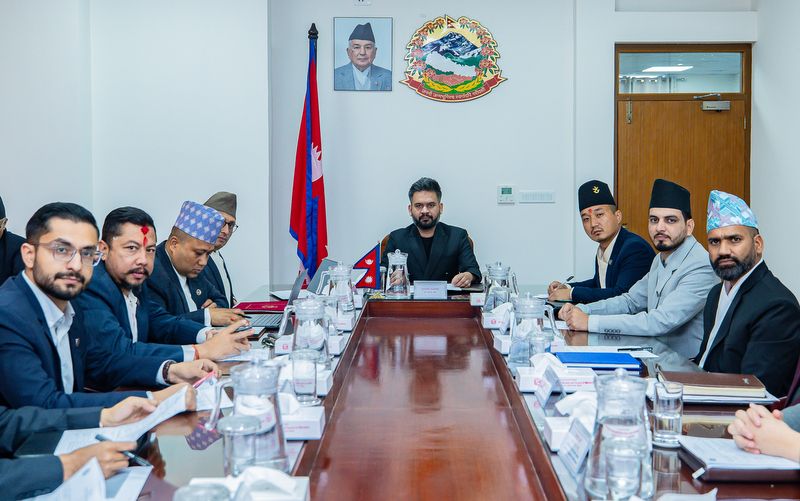
The government has taken 13 major decisions at a Cabinet meeting held on Friday, covering agricultural pricing, disaster relief, international assistance, legislative reforms and administrative matters. The decisions were made public by Minister for Communication and Information Technology Bikram Timilsina. One of the key decisions was to fix the minimum support price of wheat at Rs 4,107 per quintal for the fiscal year 2083/84. The move is expected to provide a price benchmark for wheat farmers and support the agricultural sector. The Cabinet also declared Chumnubri, Dharche and Aarughat rural municipalities in Gorkha district, along with Wards 1 and 2 of Tripurasundari Rural Municipality in Dhading district, as disaster crisis-hit areas for three months following severe flooding in the Budhi Gandaki River. Similarly, Galkot Municipality and Dhorpatan Municipality in Baglung district were declared disaster crisis-hit areas for the same period following floods and landslides triggered by heavy rainfall from Ashwin 8 to 11, 2083. To support families affected by natural disasters, the government decided to provide temporary accommodation and livelihood assistance to those who arrange shelter privately rather than staying at designated holding centres. The assistance will be available for up to six months or until alternative housing is provided. Families with up to four members will receive Rs 15,000 per month, while households with more than four members will receive an additional Rs 2,000 monthly for each extra member. In terms of international cooperation, the Cabinet approved the acceptance of emergency in-kind and service-based grant assistance worth 298 million Japanese yen from the Government of Japan, along with grant assistance of 20 million euros from Germany. The meeting also granted in-principle approval to draft bills related to the Budhi Gandaki Development Authority and national employment. In addition, it approved the Nepal Special Service (21st Amendment) Regulations, 2083, the Kalimati Fruits and Vegetables Market Development Board (Formation) (Fourth Amendment) Order, 2083, and the Feedstuffs (Second Amendment) Regulations, 2083. The Cabinet further approved the submission of the BIMSTEC Agreement on Maritime Transport Cooperation to the Federal Parliament for ratification. It also endorsed the submission of proposed amendments to the Animal Slaughterhouse and Meat Inspection Act, 2055, and the Act Relating to the Rights of Persons with Disabilities, 2074, to Parliament. Another significant decision was to bring several remaining provisions of the Criminal Offences (Sentencing and Execution) Act, 2074, into effect from Kartik 15, 2083. These provisions include Section 17(e), Section 25 and Section 26. Additionally, the government decided to forward the annual report on management audits for fiscal year 2081/82 to the Ministry of Land Management, Cooperatives and Poverty Alleviation and the Ministry of Federal Affairs and General Administration for implementation. The Cabinet's decisions span agricultural support, disaster response, international grants, employment, transport cooperation and legal reforms, with particular emphasis on assisting disaster-affected communities and establishing policy measures for the upcoming fiscal year.