National Paddy Day Celebrated Nationwide with Calls for Better Irrigation and Fertilizer Supply
Nepal marked its 23rd National Paddy Day and Plantation Festival with the slogan 'Climate-friendly technology, self-sufficiency in paddy, and prosperity.' While the event showcased modern agricultural technologies like drone spraying, officials and farmers highlighted critical hurdles, including an annual deficit of 1 million metric tons of paddy and persistent fertilizer shortages.
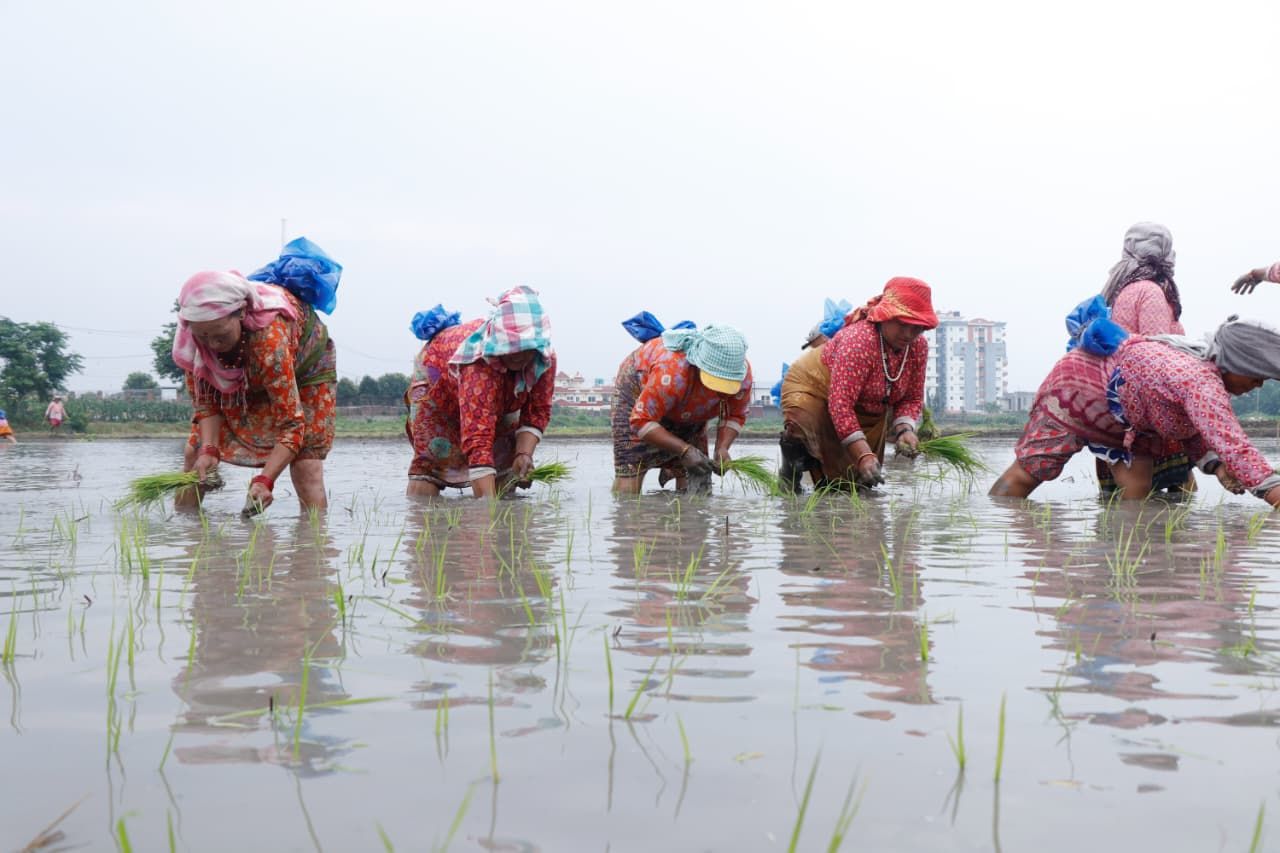
The 23rd National Paddy Day and Plantation Festival was celebrated across Nepal with nationwide paddy planting. Established by a ministerial decision on Mangsir 29, 2061 BS, National Paddy Day has been officially observed every year since Ashar 15, 2062 BS. This year's central ceremony was organized by the government at the National Grain Research Center under the Nepal Agricultural Research Council (NARC) in Khumaltar, Lalitpur. Guided by the slogan "Climate-friendly technology, self-sufficiency in paddy, and prosperity," the Department of Agriculture aimed to highlight strategies for strengthening food and nutrition security by boosting production despite growing climate change challenges. Notably, the event featured mechanized plantation and the use of drones to spray fertilizer. During the event, Ashok Kumar Chaudhary, Chairman of the House of Representatives' Agriculture and Natural Resources Committee, noted that Nepal could achieve self-sufficiency in paddy if regulatory bodies address grassroots issues faced by farmers. He urged the government to focus heavily on irrigation expansion, guaranteed fertilizer availability, and better market management. Dr. Rajendra Prasad Mishra, Secretary of the Ministry of Agriculture, Forests and Environment, pointed out that Nepal's average paddy productivity remains low. While local farming heavily focuses on a single annual paddy crop, Dr. Mishra explained that introducing proper irrigation and fertilizer could allow farmers to transition to double-crop cultivation. However, he admitted that global price hikes have strained the national budget, limiting the country's capacity to import sufficient chemical fertilizers.