Tanahu Hydropower Project Conducts Disaster Response Drill to Strengthen Safety and Emergency Preparedness
The Tanahu Hydropower Project has conducted a disaster preparedness and emergency response drill at its main dam construction site to minimize potential risks and improve worker safety. The project has also installed 17 sirens and information boards at 10 locations to warn downstream communities of potential flooding and other emergencies.
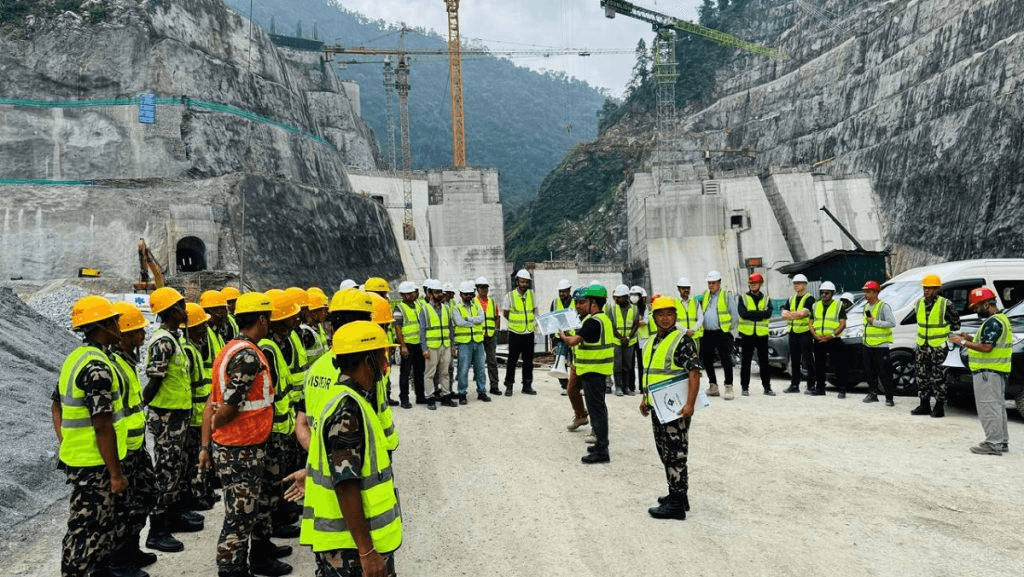
Tanahu Hydropower Project has conducted a disaster simulation exercise at its main dam construction site to strengthen emergency preparedness, reduce potential disaster risks, and ensure effective rescue and response operations during emergencies. The exercise was organized under the project’s River Safety Management Plan and Emergency Response Sub-Plan. It focused on personnel working under Package 1, which covers the headworks, and Package 2, which includes the main tunnel, powerhouse, associated structures, and equipment. During the drill, participants practiced essential safety procedures, immediate rescue operations, evacuation to secure locations, and coordination among relevant agencies during emergencies. The exercise was designed to improve the ability of workers and response teams to react quickly and efficiently to potential disasters at the construction site. The program was attended by Tanahu Hydropower Limited (THL) Managing Director Chhabilal Gaire, project managers and other officials, representatives of the Kalibhanjan Battalion of the Nepal Army based in Damauli, the Project Supervision Consultant (PSC), environmental and social management service providers, and construction contractors. Addressing the program, THL Managing Director Chhabilal Gaire emphasized the importance of preparedness, timely information dissemination, and an effective rescue system in disaster management. He stated that the project has prioritized the safety of construction workers and the reduction of potential risks. He also highlighted that regular simulation exercises help authorities make timely decisions, strengthen coordination among relevant agencies, and minimize potential loss of life during emergencies. Gaire further noted that the project’s safety commitments extend beyond the construction workforce to communities living downstream of the dam. Various awareness and preparedness initiatives are being implemented to inform residents about potential floods and other hazards and to help them respond safely during emergencies. As part of these efforts, the project has installed 17 sirens along the area extending from the dam site downstream to the confluence of the Seti and Trishuli rivers. The sirens are intended to provide timely warnings about potential hazards, particularly sudden increases in river levels and flooding. In addition, information boards have been installed at 10 locations to inform residents about evacuation routes, safe locations, and precautionary measures to follow during emergencies. The Tanahu Hydropower Project has stated that disaster risk reduction remains an integral part of its construction management strategy. Through regular emergency drills, improved response mechanisms, strengthened early-warning systems, and public awareness programs in downstream communities, the project aims to enhance safety for both construction personnel and local residents. The initiative underscores the importance of coordinated emergency planning and effective early-warning systems in large hydropower projects, particularly in areas where construction activities and river-related hazards may pose risks to nearby communities.